
Resources
How to Choose a
Ceiling Fan Controller
A ceiling fan controller selection guide for fan brands and product teams. Check the motor, electrical ratings, controls and installation space before choosing a matched kit.
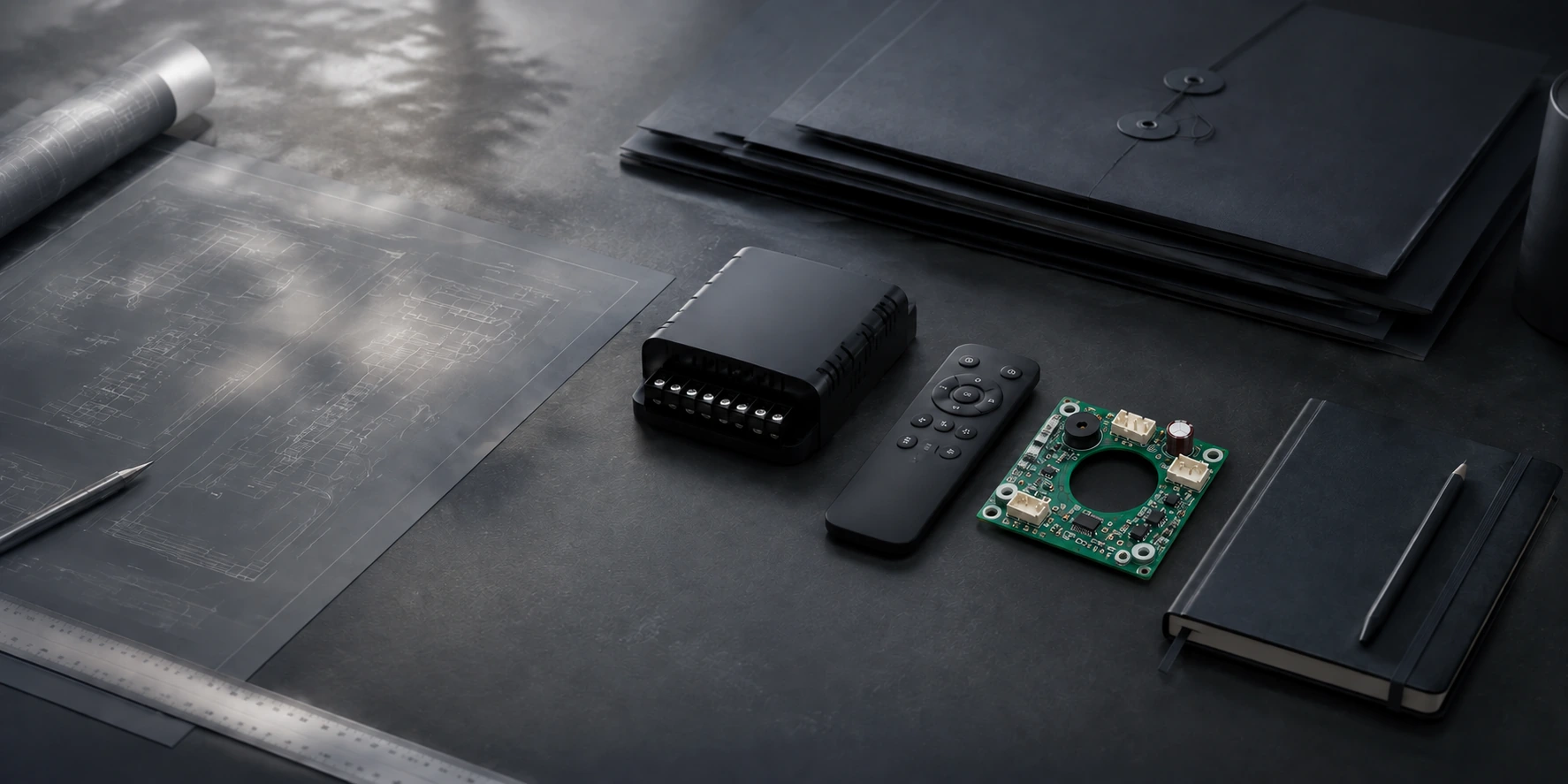
Five Inputs for Controller Selection
Gather these five inputs from your fan specification, drawings or sample. Choose the control platform first, then confirm functions and fit; a similar-looking remote is not proof of compatibility.

Electrical Inputs
Record supply voltage and frequency, motor rating and separate light load. Identify the lamp or LED driver and whether it supports the required dimming method.

Control Method
Choose handheld, wall or combined control. Confirm the receiver, pairing method and available conductors. App or voice functions require a confirmed configuration.

Required Functions
List speed steps, light switching or dimming, color-temperature control, reverse and timers. Separate essential functions from options, then check the selected model.

Installation Fit
Measure canopy or housing space, mounting points and cable clearance. For wall controls, also check wall-box depth and the panel wiring arrangement.
AC vs DC Ceiling Fan Controllers
The motor platform determines the starting product family. Supply voltage, load ratings and interfaces still need model-level checks. Wall control describes the user interface, not a third motor type.
| Your starting point | What to confirm |
|---|---|
| AC motor | Use a matched AC receiver and remote. Confirm speed control, motor wiring and separate fan/light ratings; reverse and dimming are model-specific. |
| DC motor | Match the DC motor, controller and connectors as a system. Check the controller input supply separately from the motor type, plus lighting and control functions. |
| Wall control required | Confirm the motor platform and the matched panel/receiver kit. Check wall-box dimensions and wiring, plus any optional handheld remote. A wall panel is not a substitute for the correct receiver. |
Controller Compatibility
Questions
Practical checks for ceiling fan remote and receiver compatibility, lighting, dimensions and sample review.
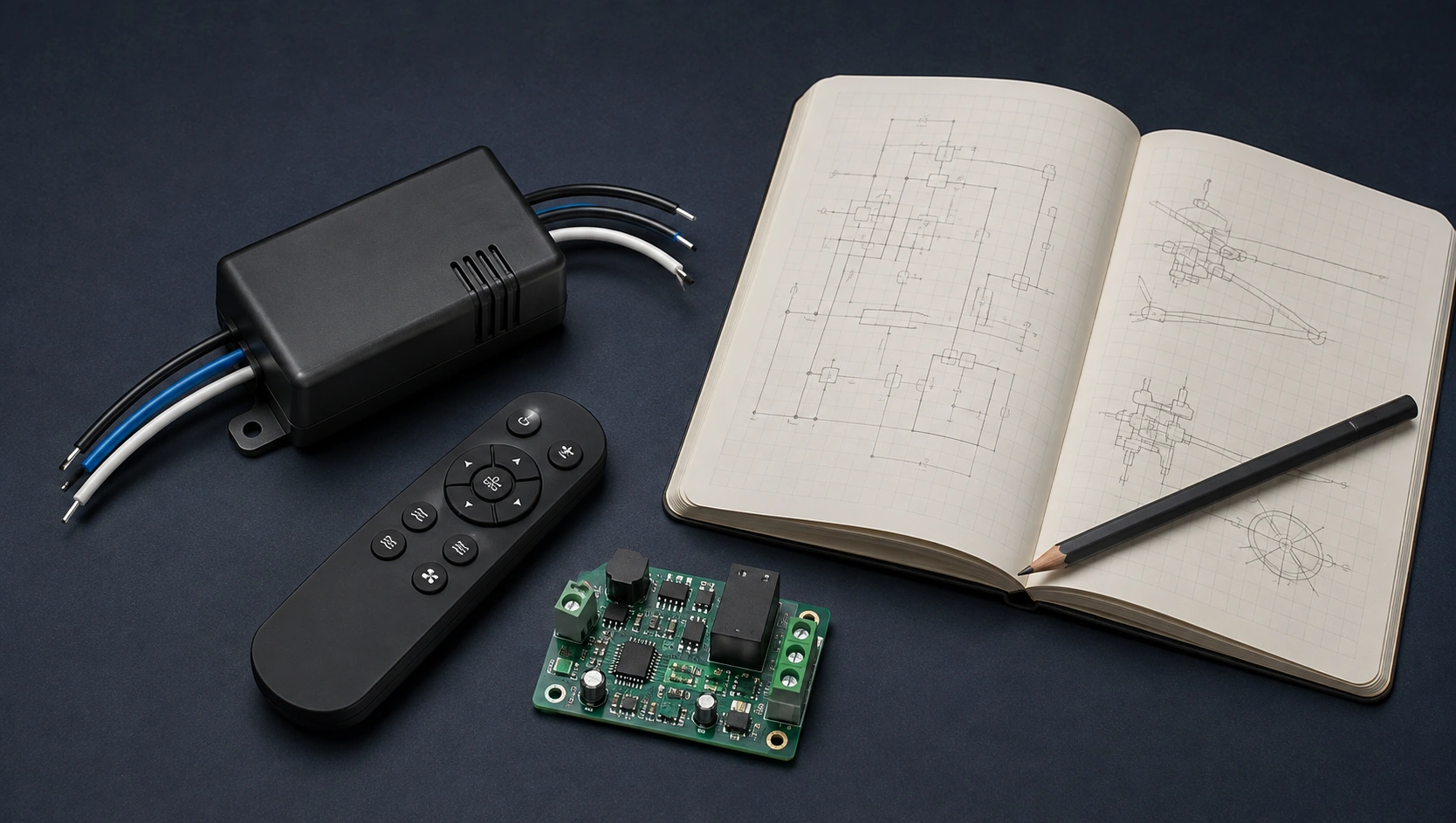
Does a DC ceiling fan controller require a DC power supply?
Not necessarily. The DC label describes the motor platform, not the controller’s input supply. For example, the published DC-LCD01 specification lists 220–240 V AC input. Other DC models need their own rating check. Do not choose a supply by motor type alone or transfer one model’s voltage to another.
Will any remote work with a receiver at the same radio frequency?
No. A shared frequency does not confirm the coding, communication protocol, pairing procedure or supported functions. Select the specified handset and receiver combination, and confirm any wall panel belongs to that system. Keep the model and version information with the sample rather than relying on the remote’s appearance.
Can one controller dim any ceiling fan light?
No. Confirm the lamp or LED driver, light voltage and load limit, and the supported dimming method. Light on/off, brightness control and color-temperature selection are different functions. 35T lists brightness adjustment, while DC-LCD01 lists light switching; neither description establishes compatibility with every light load.
How much space should I allow for the receiver?
Use the model’s receiver drawing and allow additional room for wires, connectors and installation access. For example, 35T lists a 70 × 53 × 25 mm receiver, while DC-LCD01 lists 118 × 60 × 29 mm. These are model-specific examples, not complete installation envelopes. An illustrative outline without numeric dimensions cannot confirm fit.
Does a no-neutral wall control mean the whole kit needs no neutral?
No. No-neutral wording for the listed wall-control arrangements applies to the wall panel. The receiver still needs its specified supply and fan/light connections. Check the complete model-specific wiring diagram and wall-box requirements. The panel’s wiring condition must not be generalized to the entire controller system.
What should be confirmed before placing a production order?
Validate the matched sample with the actual motor and light load. Check speed steps, reverse where supported, lighting, timers, pairing and physical fit, then record the agreed version and specification. If a rating or dimension is absent from the product page, request the model-specific datasheet and dimensional drawing before selecting the supply, load or installation space. Discuss any changes through OEM / ODM review and align the required documents with the target market.
Continue Your Project Review
Compare available products, discuss changes or review the checks needed before production.


Review Your Controller
Requirements
Share your motor type, supply, light load, required functions and receiver space, together with the target market and estimated quantity. Add a model reference when available; unknown inputs can be clarified during review.